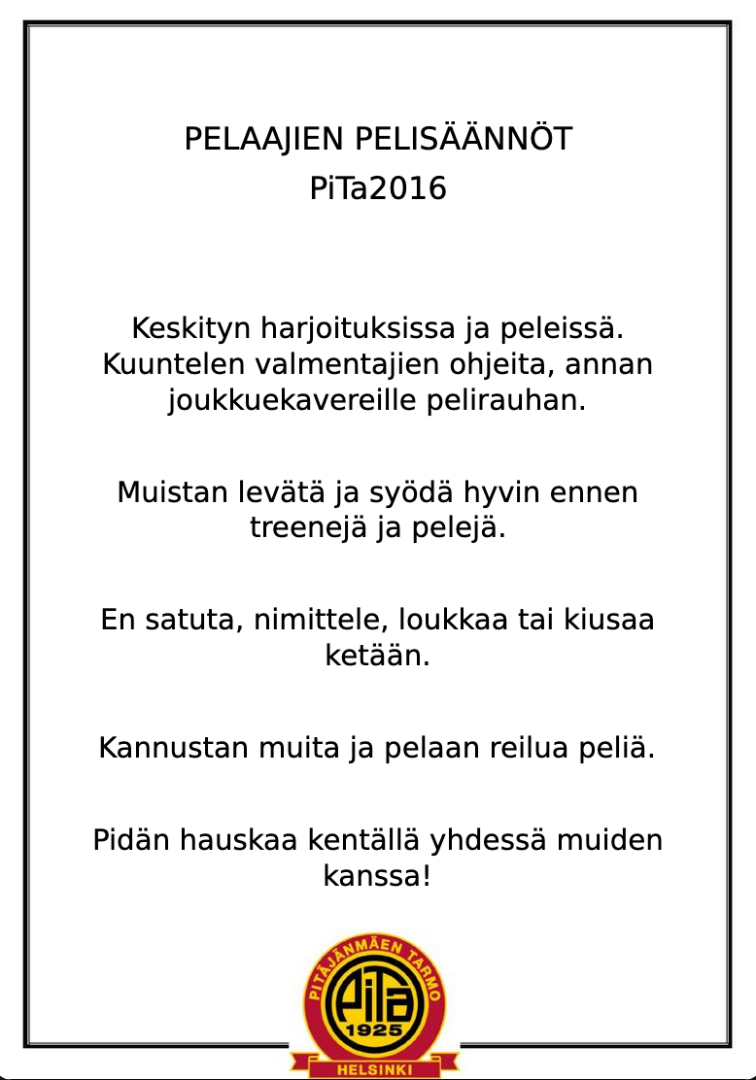
Meidän joukkueen pelisäännöt
Kun lapsi aloittaa jalkapallon tai on jo aktiivinen harrastaja, kyse ei ole vain treeneistä ja peleistä. Kyse on siitä, millainen ympäristö lapselle rakennetaan – sellainen, jossa on turvallista oppia, yrittää ja olla osa joukkuetta.
Meidän joukkueessa pelisäännöt auttavat pitämään suunnan selkeänä arjessa:
Kentällä tärkeintä on keskittyminen ja toisten huomioiminen. Pelaaja kuuntelee valmentajaa ja antaa myös muille työrauhan harjoitella. Jokainen saa yrittää ja kehittyä omassa tahdissaan. Hyvinvointi näkyy suoraan tekemisessä, joten levosta ja syömisestä huolehtiminen on osa harrastusta. Samalla pidämme kiinni siitä, että ketään ei satuteta, nimitellä tai jätetä ulkopuolelle. Pelaajat tietävät oman vastuunsa. Jos kiusaamiseen tai epäkohtiin ei puutu, on osa ongelmaa. Mikäli riitoja tulee, ne käsitellään rakentavasti ja samalla harjoitellaan tärkeitä tunnetaitoja.
Kun kannustamme toisiamme ja pelaamme reilusti, syntyy ilmapiiri, jossa on hyvä olla. Ja lopulta – futiksen kuuluu olla hauskaa.
Vanhemmat mahdollistavat harrastuksen:
Vanhemman rooli näkyy erityisesti arjessa. Kun lapsi tuodaan ajoissa paikalle, hän ehtii mukaan yhteiseen valmistautumiseen ja treeni alkaa rauhassa. Kentän laidalla tärkeintä on kannustus. Pelin aikana ohjeet tulevat valmentajalta, mutta vanhemmilta lapsi saa tuen ja turvallisen fiiliksen. Positiivinen ilmapiiri koskee kaikkia – myös vastustajaa. Jos jotain huolta herää, siitä kerrotaan mieluummin heti kuin myöhemmin. Näin asioihin voidaan puuttua ajoissa.
Arjen pienet asiat, kuten riittävä lepo, syöminen ja terveenä osallistuminen, vaikuttavat yllättävän paljon siihen, millainen kokemus harrastuksesta muodostuu. Vanhemman rooliin kuuluu näiden edistäminen ja lapsen ohjaaminen kohti elämänmittaista hyvinvointia.
Pelisääntöjen tarkoitus ei ole rajoittaa, vaan mahdollistaa. Kun perusasiat ovat kunnossa, lapsi voi keskittyä siihen, mikä on tärkeintä: pelaamiseen, oppimiseen ja kavereihin. Hyvä jalkapalloharrastus näkyy usein yksinkertaisina asioina – siinä, että treeneihin on kiva tulla ja kotiin lähdetään hyvällä mielellä.
________________________________________________________________________________________________________________________
When a child starts playing football—or is already an active player—it’s about more than just training sessions and matches. It’s about the kind of environment we create: one where it feels safe to learn, to try, and to be part of a team.
In our team, shared rules help guide everyday life and keep things clear:
On the field, the most important things are focus and respect for others. Players listen to the coach and give their teammates the space to train. Everyone is encouraged to try and develop at their own pace. Well-being shows directly in performance, so rest and proper nutrition are part of the game.
At the same time, we are clear about how we treat each other: no one is hurt, called names, or left out. Players understand their own responsibility—if bullying or unfair behavior is ignored, it becomes part of the problem. When conflicts arise, they are handled constructively, and at the same time important emotional skills are practiced. When we support each other and play fair, we create an environment where everyone feels good. And in the end—football should be fun.
Parents make the hobby possible:
A parent’s role is especially visible in everyday routines. When a child arrives on time, they can take part in the team’s shared preparation and training begins calmly. On the sidelines, encouragement matters most. During games, coaching comes from the coach, while parents provide support and a sense of safety. A positive atmosphere includes everyone—including the opposing team. If any concerns arise, it’s better to speak up early rather than later. This allows issues to be addressed in time.
Small everyday things—like enough rest, proper meals, and participating only when healthy—have a bigger impact than one might think on the overall experience. Supporting these habits and guiding the child toward lifelong well-being is an essential part of a parent’s role.
The purpose of these rules is not to limit, but to enable. When the basics are in place, children can focus on what truly matters: playing, learning, and being with friends.
A good football experience often shows in simple ways—looking forward to training and leaving with a smile.